The Liminal
Crossing the Threshold into Unfamiliar Terrain
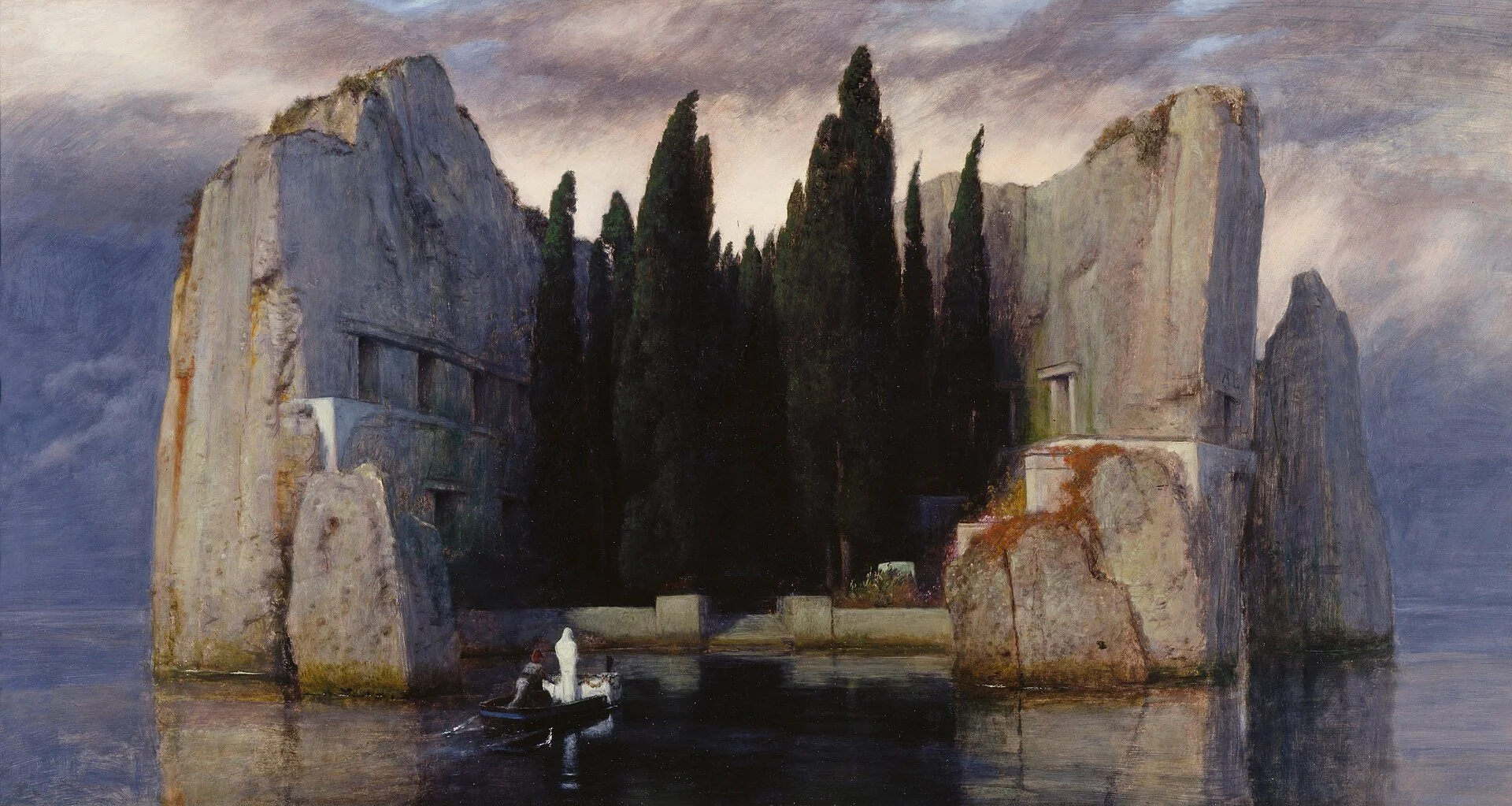
Isle of the Dead by Arnold Bocklin (1883)
As you read this, I’m somewhere in England, in the middle of the pilgrimage I wrote about two weeks ago. I’d love to tell you what it’s doing to me. I can’t, not yet. And that’s precisely the thing about the middle of a crossing: you can’t really report from it, because you’re in the thick of being worked on, your outworn ideas and ways churned like butter. Much like an oracle, or a dream, it takes time to make itself understood.
So this isn’t a scout’s message from the field. It’s a missive about the middle, and about why I’m bringing back a series I first taught a few years ago.
The trivia of a crossing
As I think about the crossing’s terrain, my thoughts go to Hermes and Hecate, both deities of the liminal and of crossings. Hecate presides over the place where three roads meet, and the Romans called her Trivia for it (from the Latin tri, three, and via, road). As guardian of these intersections, she protects travelers on their way, much like Hermes. (More on both of them in the series.)
People arrive at a crossing in their lives in all kinds of ways.
Sometimes you choose it. You leave, you start, you say yes, and now you’re standing somewhere you’ve never stood before, thrilled and a little seasick. (That’s me right now, on this trip and in my own life.)
Sometimes you don’t choose it. Something ends. Something arrives. A door closes behind you while you’re still looking at it. (That was me in 2024.)
And sometimes nothing has happened at all, except that the life you were living has quietly stopped fitting, and you can’t yet say what’s replacing it. (That was a good chunk of my 40s, the start of this long odyssey called midlife: a niggling discomfort that led me to make different choices.)
What these have in common isn’t difficulty per se. Sure, they can be difficult, complicated, complex, and even exhilarating.
What makes it a crossing, a threshold, a liminal space, is that the ground is unfamiliar, and the ways you usually get your bearings don’t quite work here.
I feel it’s a sort of discombobulating undressing that combines layered feelings: excitement, anxiety, fear, but also arousal toward something potently new, both thrilling and terrifyingly unknown and other.
On the quiet crossing, the drift
Of the different types of crossings I’ve noticed, it’s the third one I want to sit with, because it’s the easiest to miss.
The quiet crossing doesn’t swerve into your life. It unfurls. It’s an imperceptible drift.
There’s no phone call, no ending you can point to. Just a current so gradual you don’t notice you’ve left the known shore until you look up and can’t see it anymore. By then you feel caught unawares, and more than a little discombobulated.
In your feedback on the Threshold Lover Quiz, some of you have told me you don’t feel you’re in a crossing at all. For some, a major crossing has just happened. For others, I wonder if it’s the quiet kind, since those hide so easily. With no clear event to point to, we tend to read the discomfort, the niggling, and even the disorientation as a glitch in the Matrix or simply as something wrong with us.
If there’s a tell, I’d say it might be the hour of the wolf: those small hours when the house is asleep and you’re not, and a question you haven’t said out loud comes to sit on the edge of the bed. It doesn’t make demands. It just sits there, quietly asking to be noticed.
The disquiet, or its more expressive cousin, discombobulation, is part of it. Both come to divest us of the older outfits of our identities, the ones that no longer fit, because the one who starts a crossing is never the one who arrives.
One of the many casualties of the liminal is the identity
that got us to this crossing.
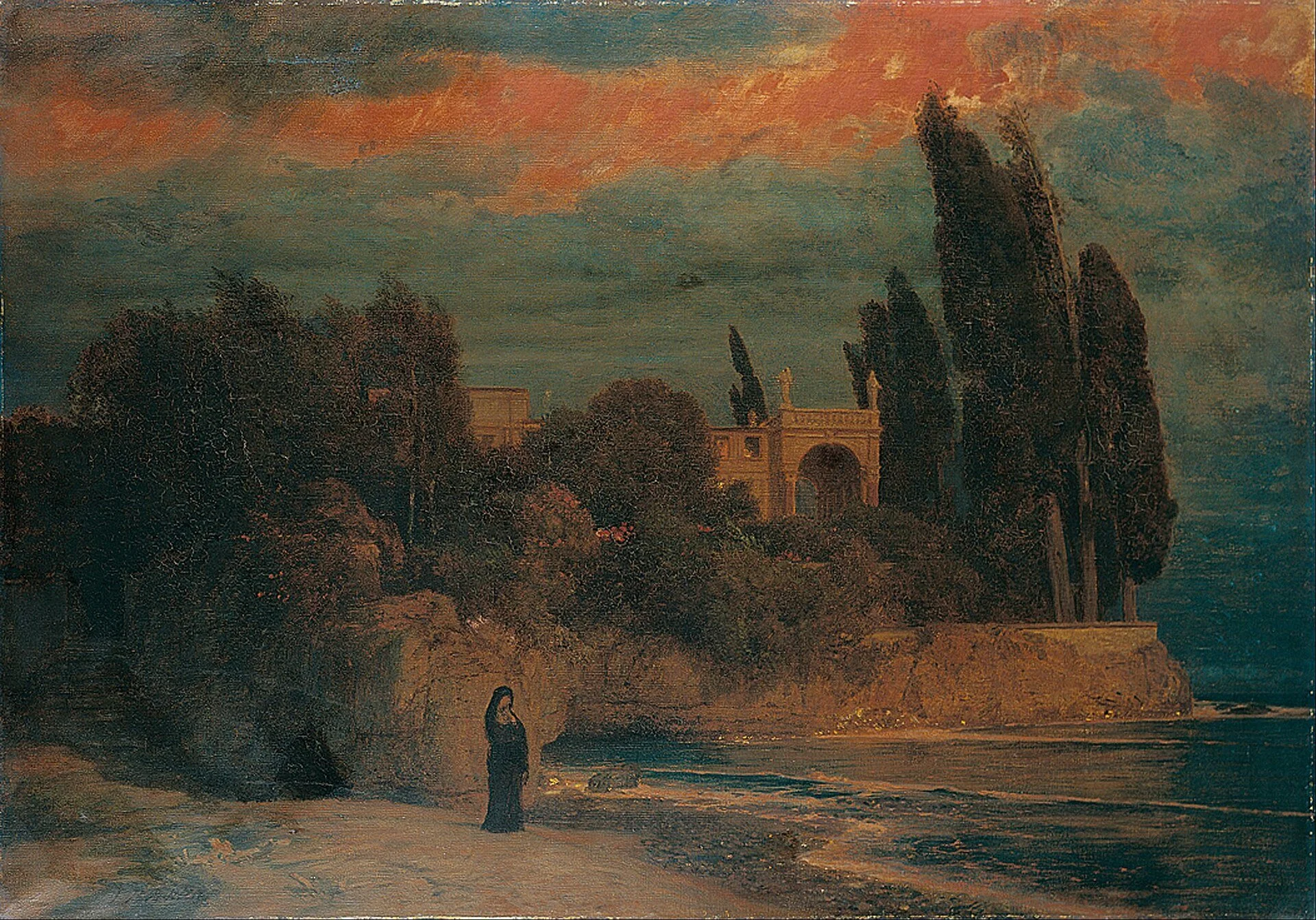
Villa by the Sea by Arnold Bocklin (1871)
My own quiet crossing
I tend to teach what I’m in, what I’m curious about or attracted to.
Liminality is an old friend of mine. I’ve spent my life bridging two cultures and two languages, and I’ve always been drawn to reading the patterns underneath things: in charts, in stories, in people’s life stories. Being bilingual and bicultural makes you a constant weaver between two ways of being, as if the weaving itself might help you make sense of who you are in the world.
But since the end of 2024, I’ve been deep in this terrain. It started with grief and burnout. Now it’s going deeper, down to the roots of the body, with perimenopause. Its effects on me are more pronounced now than anything I’ve experienced so far, and I’m finally noticing the psychological shift that comes with it. It’s a liminal space that is body and mind and, dare I say, soul.
But it’s a creative crossing, too, changing and challenging my relationship with my work in the world.
It brings with it a question that lingers:
who am I if I don’t do what I used to do?
That question doesn’t show up much on the surface. But I imagine it’s the one keeping many of us restless and awake in the hour of the wolf. Remember those Choose Your Own Adventure books from the 80s? Some nights it feels like I’m standing at the bottom of the page, deciding which story to turn to next.
Why I’m bringing The Liminal back
I first taught this material a few years ago, and I’ve felt called to bring it back. So much has happened since, and I’m not the same person (nor the one who visited England back in 2023). But this series, like this trip to England, is a return, one where I’m meeting it as someone new.
Back then, my maps focused mostly on how a crossing moves, along with a few of the better-known threshold dwellers who appear when we’re in one of life’s transitions.
Since then, romance novels have widened my view of two things: the terrain of the liminal itself, and the other threshold figures who show up along the way. Before, I focused mainly on the ones who test us at the threshold and forgot the companions who walk with us.
Is my view definitive? Of course not. The journey through this terrain is never the same twice, because we’re always different when we meet it.
But one thing I feel stays true no matter when we cross it: what helps in a crossing isn’t ready-made answers, especially about what happens next.
Nobody can tell you what happens next, and I won’t pretend to. Stories are what help us locate ourselves in this terrain and navigate it. They always have: the stories of those who traversed the liminal and brought back their maps of crossing, from the goddesses who descended into the underworld to the heroines of fairy tales and, yes, the heroines of romance novels.
Stories keep us company, because the middle can feel
lonelier than it needs to be.
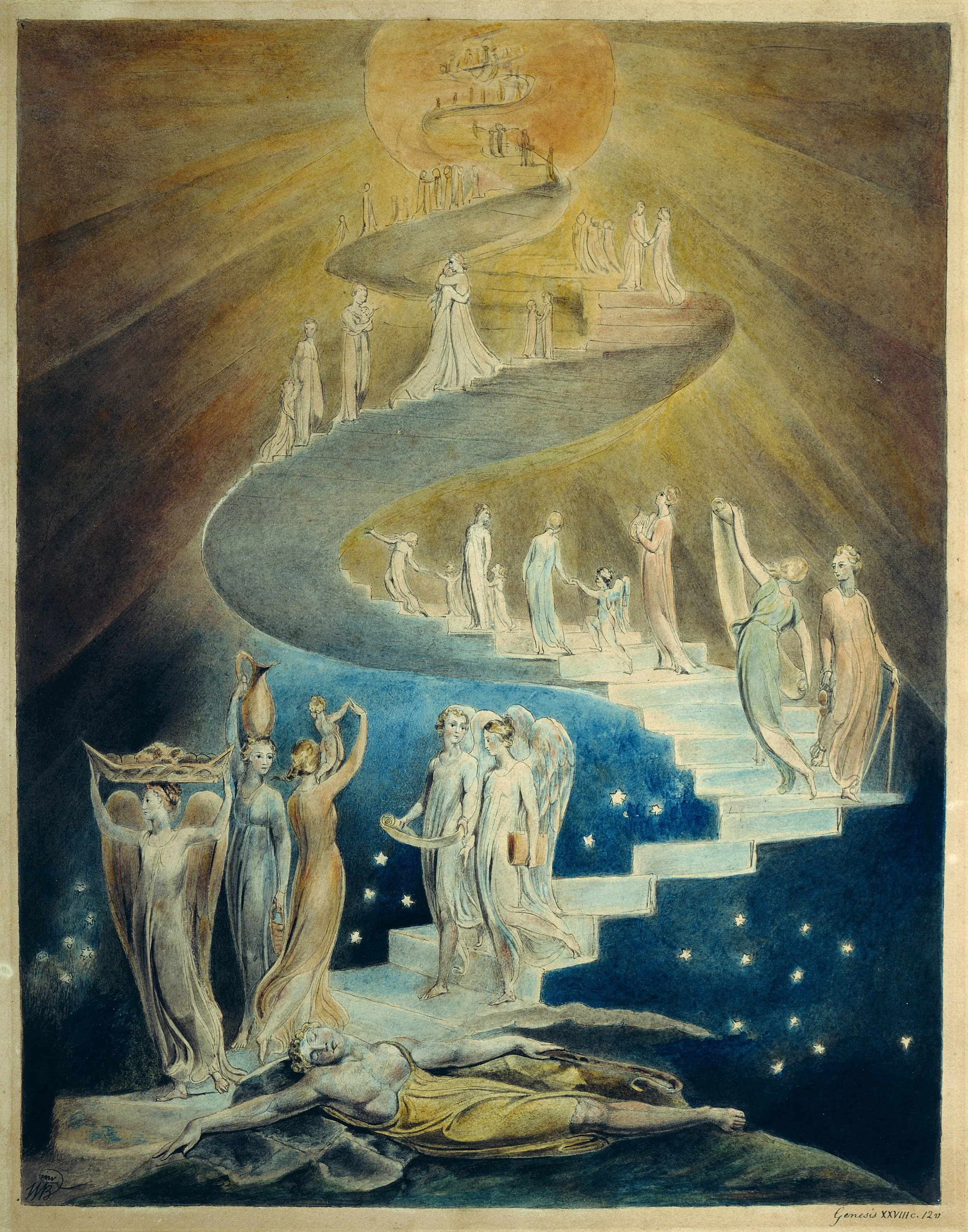
Jacob’s Ladder by William Blake (1799-1806)
My invitation as I stand in my own crossing - literally
As the year winds down towards longer nights and shorter days, we feel this collective crossing in our moods. That’s why I chose December as the perfect time for this series: it holds several thresholds at once. The year is ending. The solstice turns the light. And the larger world is in the middle of its own long crossing, in more places than anyone can keep track of. Inside all of that, most of us are carrying a personal one too.
So this December, across three Saturdays, I’m teaching The Liminal: Crossing the Threshold into Unfamiliar Terrain.
We begin with love stories, as ways to reimagine how we approach the threshold and the terrain beyond it, then the teaching, then room to ask and share. The last session falls two days before the solstice, when the Sun crosses into Capricorn, Saturn’s sign, where the old threshold dweller stands at the door like a cosmic bouncer. The whole series leads us towards the longest night and the slow return of the light after it, a few seconds a day at first (the gain grows as winter goes on), so quietly we almost miss it.
Now on to you: where are you right now? Walking toward a crossing you chose, carried by one you didn’t, or quietly drifting?