Travel as Pilgrimage: England, the Bayeaux Tapestry, and Jane Austen’s House
My mother’s travel rule: don’t look at things like cows look at paintings.
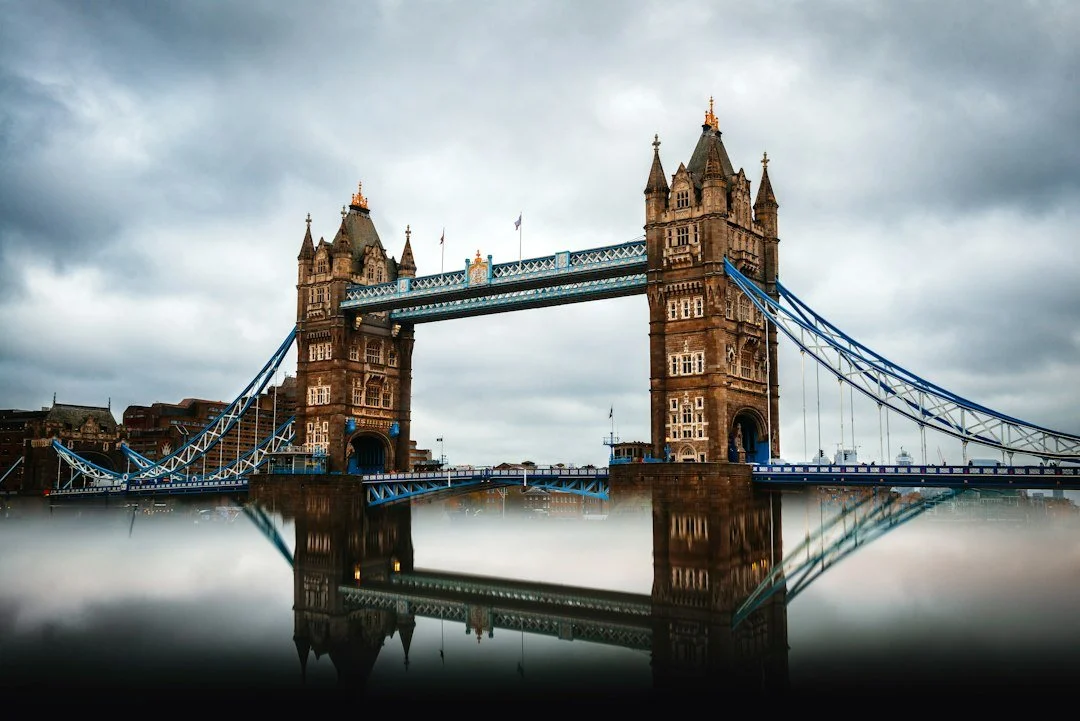
In a few days, my husband and I fly to England, a journey many months in the making. My process is always the same: excitement when I start planning, and then, as the time gets closer, the excitement turns into a syrupy mix of anxiety, anticipation and a pep talk to myself to relax and stay present and curious about what is rising. It isn’t until I’m strapped into my seat belt, about to leave the tarmac behind, that I’m able to fully embody my traveler self.
By that point, I’m solely in the hands of Hermes, praying to the other liminal deities for a smooth journey. Or I say the short prayer my mother taught me as a child:
“Deus adiante, e paz na guia.”
or God ahead, peace on the journey. (My rough translation.)
The trip coalesced into reality the day I woke up at 4 am to go online for tickets to the Bayeux Tapestry at the British Museum. I waited over six hours, since by 4 am there were already 15,000 folks ahead of me, all vying for the chance to see this thousand-year-old (well, 960 years, if we’re being sticklers) artifact that represents a tectonic shift in English (and I dare say European) history. Once I got them, I felt a little the way I imagine Taylor Swift fans felt upon securing their Eras Tour tickets. I guess I’m a Swiftie for historical artifacts!
My inner history geek loves the Middle Ages, and I especially love everything around the Norman invasion. I never thought I’d get to stand in front of that tapestry, so those tickets became the origin point of this journey. Everything else has been planned around the day we see it, a tapestry that has taken centuries to return to the land that made it. It may be a little grandiose, but as the tapestry makes its pilgrimage home, we’re making ours to see it in all its nearly 70-meter (230-foot) glory.

A new decade is its own threshold
While the tapestry is the central pin holding everything else in place, this trip started with my husband’s 50th birthday. For years we’d talked about doing something special to mark it. We tossed around other places, other ideas, but when it came down to it, he said he wanted to go back to England. He has felt at home there since the first time we landed, over a decade ago. Being in England helped him understand why he likes his food overcooked and why his heart sings for a Sunday roast. He still challenges himself to master the Yorkshire pudding, a work in progress.
I understand the pull. I’ve wanted to go since I was a kid, so for my own 50th, England was the trip I wanted too. For my birthday, we took a massive road trip through Northumberland and Yorkshire, then through Wales, and I got to spend my actual birthday at Tintagel Castle, surrounded by all things King Arthur, at least in my imagination. It was a dream I’d carried since I was a teenager, ever since reading The Mists of Avalon. So England has now held both of our fifties.
And turning 50 is a substantial threshold: half a century, and the gateway into becoming an elder. For me, the 50s are the crux of midlife, which is in and of itself an undeniable threshold crossing. And entering a new decade, any decade really, is its own liminal space.
How we enter it matters, and so do the intentions we bring to a new phase of life, much like the opening of a story.
The images and intentions plant seeds that may or may not blossom, but they nonetheless give us a certain kind of awareness, one that helps us better understand our lives as an unfurling story. It’s not about controlling the narrative with the hubris of thinking we are the main character and everything else flows from us.
It’s more about being in relationship with what surrounds us: the people, the places, and the ideas that influence our ways of being in the world. And the threshold of a new decade is a potent one, where we can stop to revisit, rethink, and, more importantly, reimagine our life’s story.
Same tickets, different journeys
Now, my husband doesn’t see this trip as a pilgrimage. He’s the pragmatic one; I’m the symbolic one. For him, going to England is about the pleasure of the ride. As he likes to say, he’s the kind of guy who prefers the journey to the destination. He just likes being in England, enjoying the whole vibe of the place, and that’s enough for him.
But I like both. I want the road, and I want the shrine at the end of it, much like the medieval pilgrims did, which may be one more sign of my old medieval soul.
Going as if to an oracle
To me, a pilgrimage isn’t just a trip. It isn’t even just a journey.
It’s an approach.
It doesn’t have to be to a foreign country; it can be to a different part of your town. What changes is the intention. It’s about going with open curiosity, as if you’re going to visit an oracle. You may or may not have a question ready, at least not consciously, but approaching a place with the openness curiosity affords allows us to receive (and give) what is ready for us.
Now, the oracle isn’t only the place, although place is key. It’s more about the whole experience of being there: what comes to you, how you relate to the space, how you feel, what you notice. It’s a full-body experience, and I’d say it’s also a widening of consciousness, not only about what’s around you but, perhaps more importantly, about what rises from within you while you’re there. What rises may not make itself known right then and there, but it has a way of unfurling in time: over weeks, months, even years.
I’ve traveled this way for a while now.
It started when I first went backpacking through Europe with my mother in the mid-90s. She was adamant that we weren’t just going to these places to look at things like cows look at paintings. It was her way of saying that we needed to prepare ourselves for the trip, read about the places, and learn some of their history (she was a history teacher, so it came with the territory), so that we didn’t just ‘consume’ what we saw but could admire it.
In the years since, I’ve carried her image with me, doing my best not to be a cow looking at paintings, and not to ‘just’ consume a place the way our culture encourages, with hordes of tourists descending on it like locusts. We go, we take the photos, we post them, we hashtag them. It’s almost as if we haven’t been somewhere until we’ve shared it. So many of us see a place through the small screens of our phones, collecting views and things as if checking items off a quest.
For me, going to a place is relational. It’s seeing with a place rather than looking at it.
(Sure, because I contain multitudes, I’ll post glimpses on Instagram, but only the parts my field scout thinks are worth sharing.)
A nod to Scotland
The UK and Ireland hold a special place in my soul. I’ve been back several times, and every return feels a bit like visiting an old friend I haven’t seen in a while.
Last year I went to Scotland with a good friend, and we approached that trip as a pilgrimage, each in our own way. Scotland taught me things I’m still unpacking and letting seep into my bones. I learned one of them halfway up a trail I never finished. I mention it because pilgrimages aren’t one-and-done. They have a long unfurling. If you’re curious about my Scotland experience, I wrote about it in The Return, Part 1 and Part 2.
As for England, I can’t compare yet, since I haven’t arrived, but I already suspect this pilgrimage will teach different lessons and open other doors for me.
Two kinds of crossing
This trip holds two kinds of crossing for me. I wouldn’t call these places liminal, per se, but each one stands for a crossing.
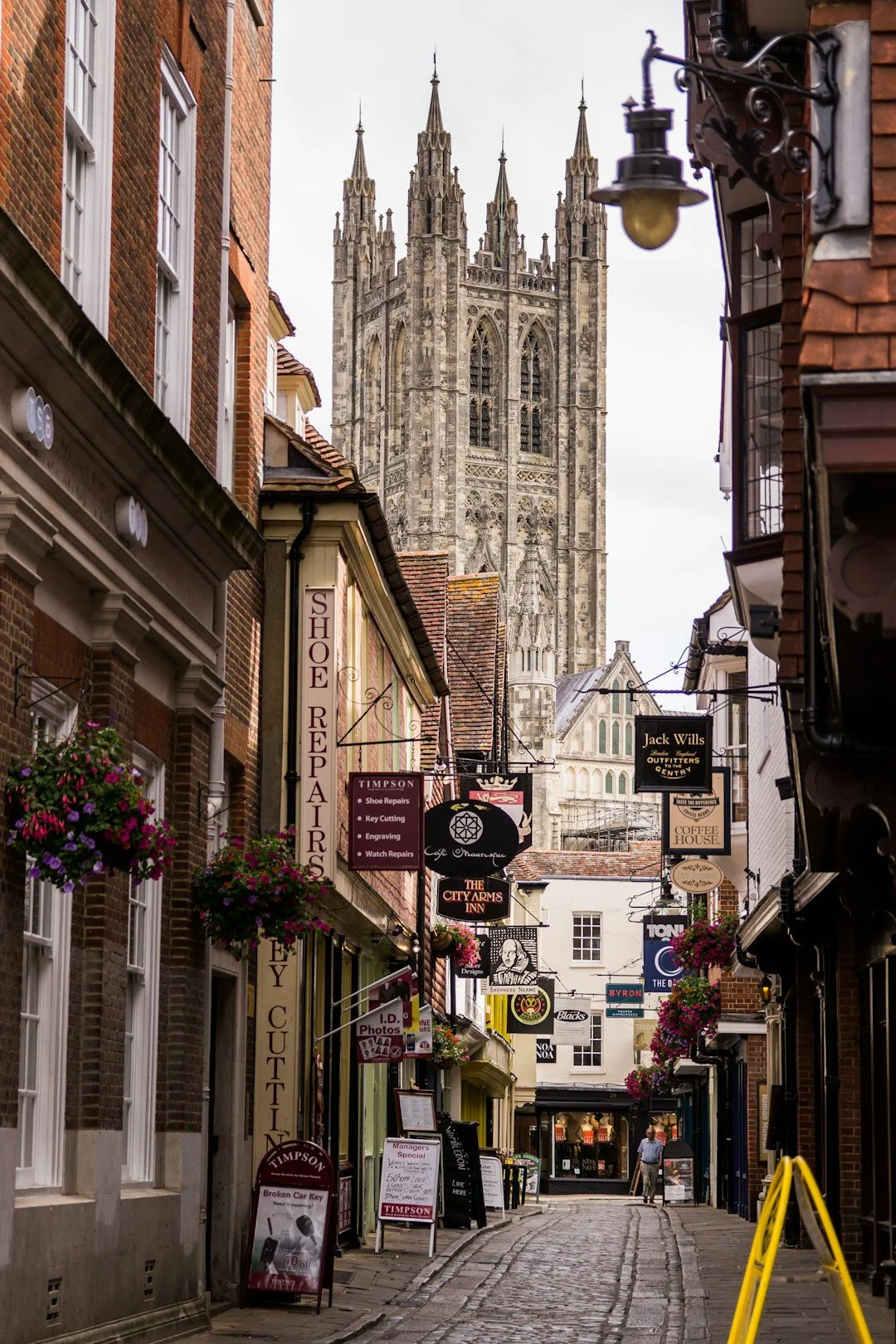
The first is historical, and it takes us somewhere new to me, England’s southeast. Canterbury. Hastings. Hopefully the White Cliffs of Dover, which I’ve always wanted to see. Along with the Tapestry, these hold crossings that changed the fate of a nation. Granted, I’m not English, though I do lay claim to 7% Midlands DNA (plus 1% southern Wales. Hey, I’ll take what I can!). Still, in the collective fabric, the collective tapestry of Western history, they signify something: the feeling that authority has shifted.
One is the Battle of Hastings. We’ll get to see a reenactment of that fateful battle, and later the tapestry itself: that long comic strip, in all its regalia, telling the story from the victor’s side. For the record, I’m Team Harold.
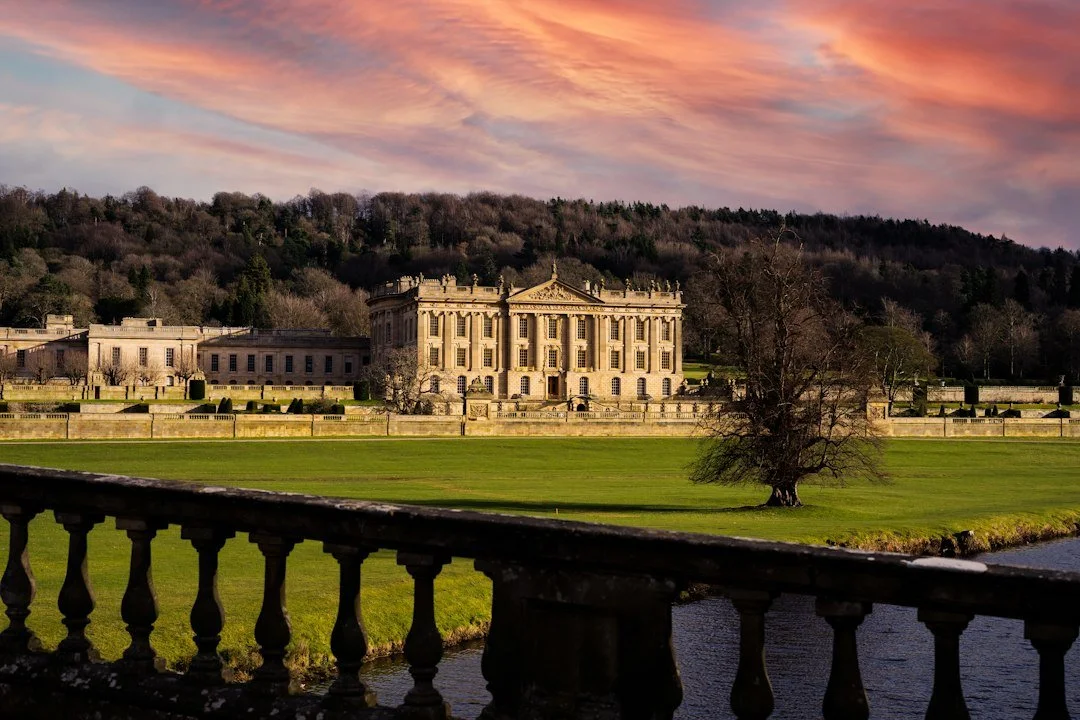
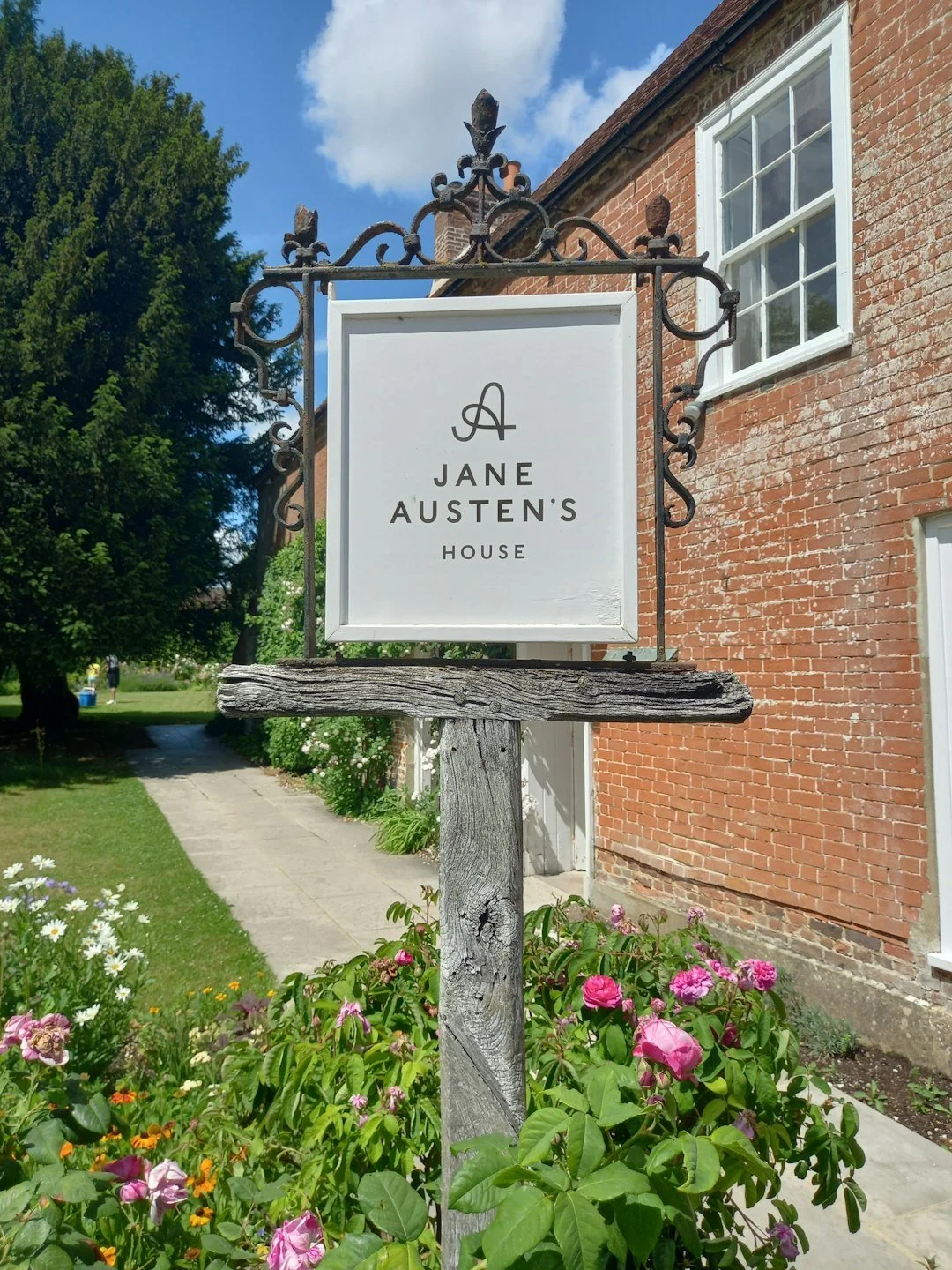
The second is literary. I’m looking forward to visiting Jane Austen’s House in Chawton, and later Chatsworth, which stood in for Mr. Darcy’s Pemberley in the 2005 Pride and Prejudice film. I visited Chatsworth years before I met my husband, so going with him now feels sweetly romantic.
Jane Austen matters to me more now than ever. First, she’s my unofficial mother of romance. I know she isn’t the mother of the genre, but to me she is. And now that I’m diving into romance and courting my own writing in fiction, visiting her house feels a bit like a Catholic visiting the church of a patron saint to ask for blessings and miracles in whatever endeavor they’re embarking on. My patron saint just happens to be Jane Austen.
So this is my old medieval soul meeting my writing heroine.

Tapping into the Force
We’ll also stay a few days in Canterbury, a place of pilgrimage for centuries. While Jane Austen’s house is my shrine, Canterbury is the collective’s. Although I’ve never read Chaucer, I feel like I’m joining the pilgrims who have been walking there for ages. I’ll be tapping into the Force, because there’s something about going to a place so many have visited with intentions and wishes. It weaves an element of magic into the trip, for lack of a better word.
I feel that when you visit places that carry such a charge, you’re not just tapping into something; you’re also announcing yourself.
I believe in reincarnation, or maybe in many simultaneous lives, since everything may be happening all at once. Either way, I feel such a connection with the medieval world that going to these places feels like touching some of the lives I’ve lived. It feels potent, and I’ll report back on how I experience it all.
Who walks with us
Part of the magic of this trip is who we’ll see along the way. It feels as if they, too, are threshold dwellers in their own way.
In Canterbury, I’ll finally meet my mentor in person. We’ve worked together online (thanks to the miracle of Zoom) for a few years, and I consider him not just a mentor and a friend but, in some ways, a father figure.
I’ll also see an old friend I haven’t seen in ten years. I met him through my father when I first moved to New York; my father taught him Portuguese. Seeing him feels like a nod from my father, too, from beyond. And up north, I’ll see a good old friend I met more than 25 years ago, the one I talk to every Thursday. We’re each going through our own thresholds, and this time we get to touch base in real life instead of over Zoom. There’s something about being in the same room, IRL style, that embodies the encounter.
What rides along
Even a crossing we choose carries echoes of other crossings. This one carries two anniversaries that fall while we’re there. It will be two years since my mother died, and it will also be our wedding anniversary. I’ll be visiting Jane Austen’s house that same week. My mother of romance, visited in the week of my mother’s passing. That feels symbolic to me, although I’m not entirely sure how. I’ll be curious to see what unfurls from that visit.
Both anniversaries changed who I am. One ended my life as someone’s daughter. The other made me someone’s wife. Both led me to different aspects of sovereignty, one solo and one in partnership.
And somehow this trip weaves both of my parents in. My mother, through the week we visit Chawton. She’s also the one who taught me to travel as a pilgrim,” would close that circle. My father, through the friend who was once his student, and through a mentor who has become a kind of father figure.
It seems pilgrimages carry those who are no longer with us in the old way but who still find their way into our lives, in new resonances.
The unfurling
All this to say, a pilgrimage starts working on you before you go.
The moment you set the intention and start preparing, it’s already at work. It works on you while you’re there, even if the time is short. And once you come home, whatever medicine you received unfurls slowly, over time. An oracle is like a dream: it takes time to make itself understood.
I don’t know what England will unfurl for me, but I’m staying curious.
Now on to you.
What crossing are you walking toward right now,
and who’s walking it with you?
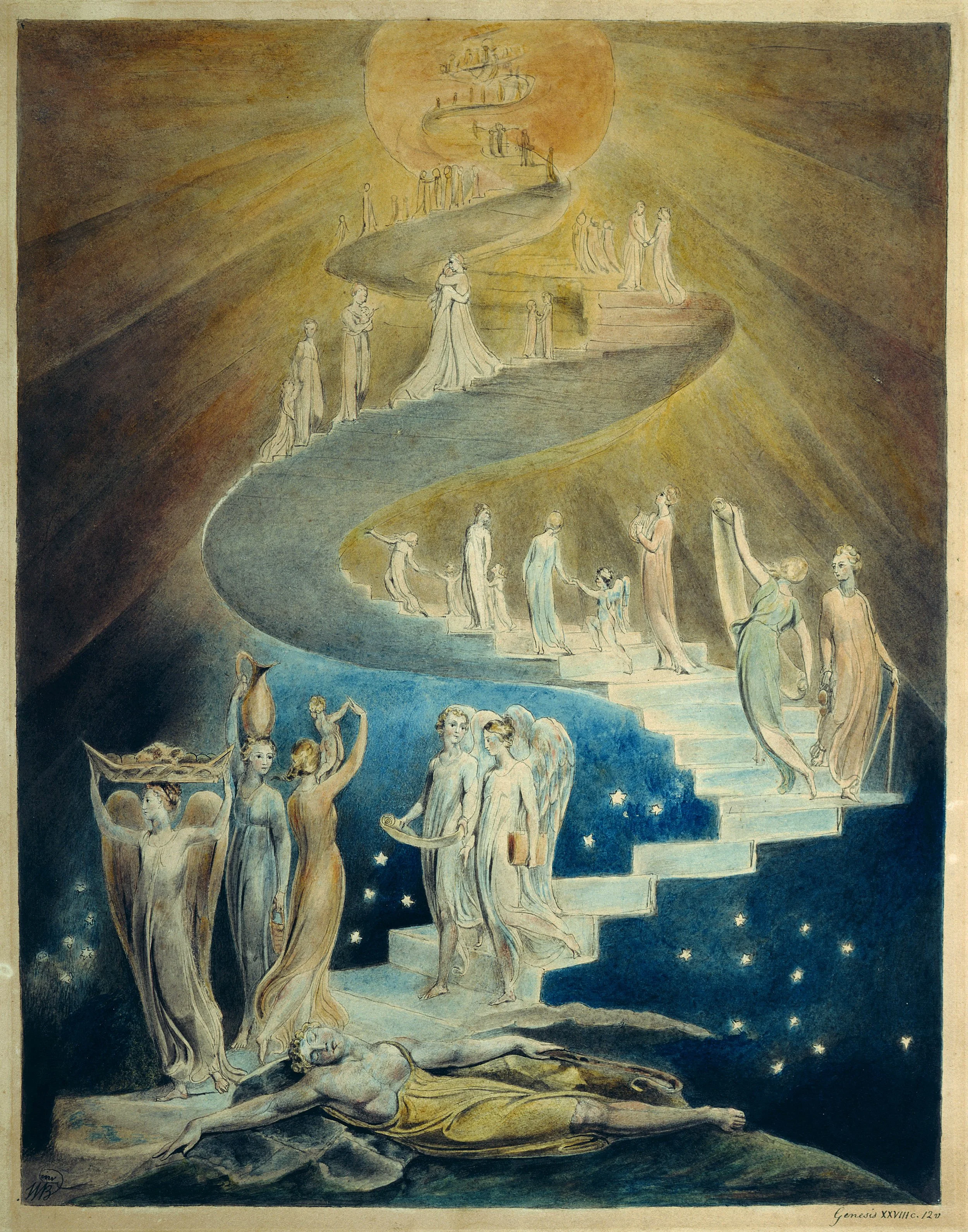
Jacob’s Ladder by William Blake (1805)
The Liminal
Crossing the Threshold into Unfamiliar Terrain
October ends at a threshold we all cross together. At Samhain, the year turns into its dark half, and for the Celts, that’s where a new cycle began. They started things in the dark.
The dark is where all is seeded.
December takes us to the deepest point of that dark, the longest night, just before the light turns.
That’s when I’ll be teaching a three-part series for anyone standing at a crossing of their own, chosen or not. And like the Celts, we’ll begin in the dark of the moon: The Liminal: Crossing the Threshold into Unfamiliar Terrain.
Come walk your liminal ground in good company.