Romance Novels Know Something About This Moment That Our Doomscrolling Doesn't
Why Your "Guilty Pleasure" Is Actually Resistance Training

Mary Magdalene in the Desert by Emmanuel Benner (1886)
You know that 3am feeling when you’ve scrolled through every catastrophe, every outrage, every proof that the world is burning, and your body is buzzing with a cocktail of fury and helplessness? Your nervous system is shot, your hope is threadbare, and yet you can’t stop looking for the next hit of bad news.
Now imagine reaching for a romance novel instead.
Not because you’re avoiding reality—but because your body knows something your doomscrolling doesn’t: you need to rehearse joy like your life depends on it.
Last January, I discovered this truth the hard way. My mother had died, leaving me to navigate grief while handling her estate. Burnout had stripped me down to nothing. I’d been a devoted non-fiction reader since my mid-twenties, genuinely hungry to understand how people worked, how the world worked. But when exhaustion and grief collided, all that seeking felt hollow. The books that once fed my curiosity now required energy I didn’t have. Perimenopause stealing my sleep didn’t help. I was empty.
A friend recommended a romantasy series. Social media dismissed it as “fae porn,” but I was too tired to care about literary credibility. I devoured five books in two weeks and found myself on an unexpected journey through trauma and grief, through mother and father wounds, through the alchemy of chosen family. This wasn’t escapism—it was recognition. A return to my first love: stories. The joy I’d known as a child reading fiction came flooding back, but now carrying adult understanding of why we need promised endings.
One series became 131 books by year’s end. Not because I was seeking transformation—I just kept following the craving. Each book my body chose revealed another facet of what I was actually digesting: stories about women claiming their worth after betrayal, about desire returning after numbness, about power found in the ruins of who we used to be. By book 50, I hadn’t just found my reading joy again—I’d found my creative pulse, beating stronger than it had in years.
Here’s what I’ve discovered: romance novels are trojan horses.
Under the dismissive labels—fluff, trashy, smut—they’re teaching sovereignty, transformation, and healing in plain sight. The very things that make intellectuals dismiss them (predictable outcomes, centering pleasure, insisting on joy) are exactly what make them powerful medicine for our current moment.
Think about it: In a cultural climate where having different (visible) desires is dangerous, when speaking of sovereignty of choice is being violated, and standing up for wanting humanity and connection are being attacked, romance may seen like an unlikely medicine. But romance readers have been doing this forever—disguising revolution and sovereignty as bodice-rippers, hiding agency in alpha heroes, teaching resistance through happily-ever-afters. We know our books look harmless. That’s the point. That’s the gift.
This is what romance novels know that our doomscrolling doesn’t: our bodies need stories that end in satisfaction.
Not because we’re avoiding reality, but because we’re training ourselves to recognize what resolution feels like. More than that—we’re rehearsing possibility. Like athletes who visualize themselves crossing the finish line before they run, romance readers are practicing victory. Every happy ending is a rehearsal for believing we deserve one. Every resolved conflict teaches our nervous systems that resolution exists. Every transformed dynamic shows us that change is possible—not just in fantasy, but as a template we can bring back to this so-called real world.
In a world serving us endless conflict with no catharsis, romance insists on completion. It says: here’s what genuine chemistry looks like versus performed connection. Here’s how trust rebuilds after betrayal. Here’s what it feels like when power dynamics transform into chosen vulnerability. This isn’t escapism—it’s the most practical education available in how humans actually heal.
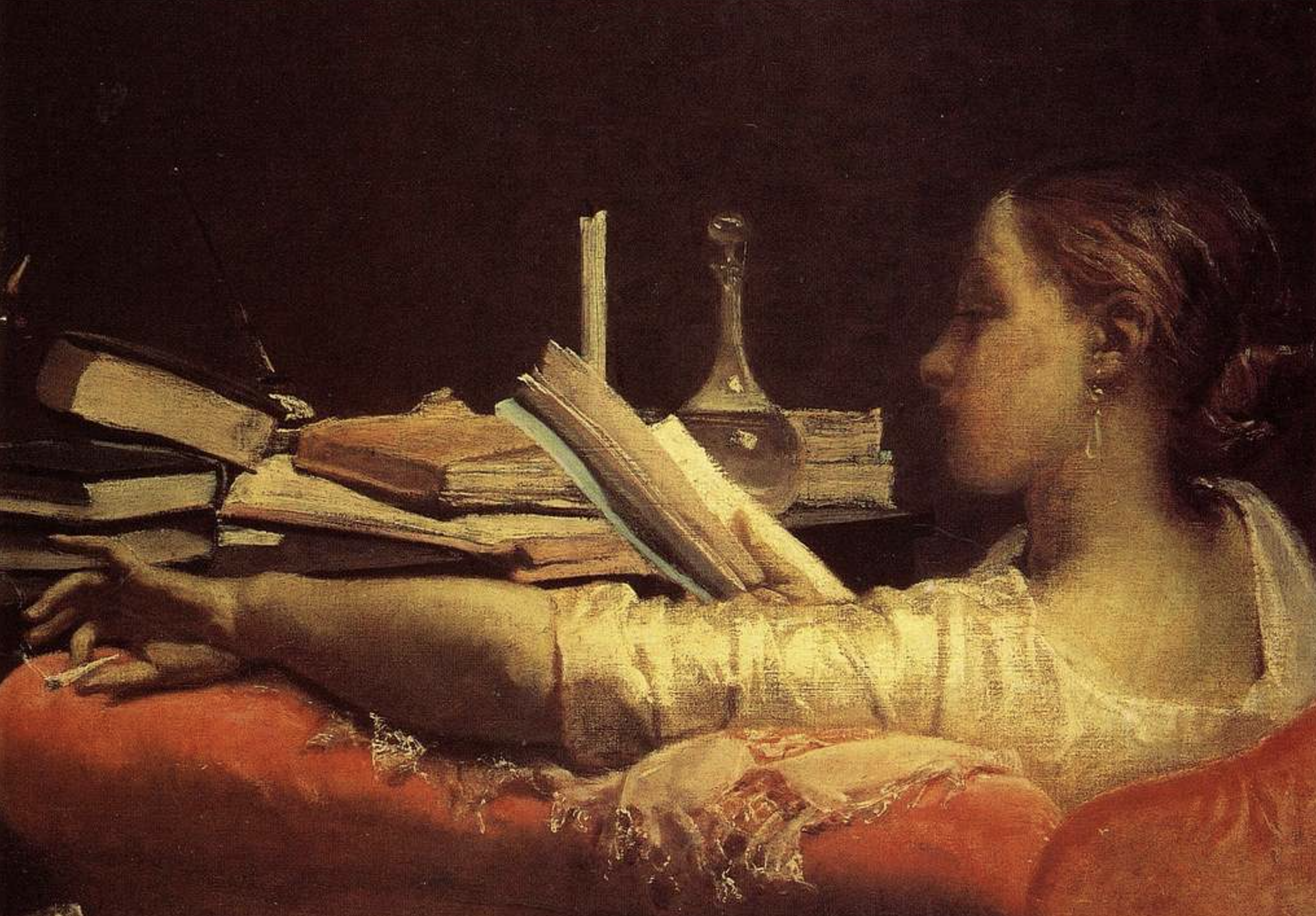
The Reader by Federico Faruffini (1864)
Every romance trope is a masterclass in transformation.
Enemies to lovers teaches us about transformation of the Other into intimacy. Forced proximity shows us how closeness dissolves the boundaries we think we need. Second chance romance whispers that we’re allowed to evolve beyond our first failures. Even the most fantastical premises—vampire lovers, alien mates, time travel shenanigans—are just containers for the most human questions: Can I be loved as I actually am? What happens when I let myself want? How do I claim pleasure in a world that profits from my exhaustion?
This is why I started a monthly book club this January.
Not because I’ve discovered something romance readers don’t know—but because I wanted to create a space where we could name what we’re really doing when we read these books. Where newcomers intimidated by decades of genre knowledge could sit beside lifelong romance readers and discover we’re all rehearsing the same revolution, just through different book lovers.
In our gatherings, we don’t assign books or judge heat levels.
Everyone chooses their own romance—contemporary, historical, paranormal, sweet, spicy, whatever calls.
Then we come together to explore:
What drew you to that particular story?
Which dynamics lit you up?
What scenes did you read three times?
We read our reactions like tea leaves, discovering what medicine our reading bodies are seeking.
Because here’s what becomes available when we take our romance reading seriously: We start recognizing authentic desire versus manufactured want. We notice which storylines our bodies reject and which make us stay up until 4am doing the ‘one more chapter’ prayer.
We develop what I call a pleasure compass—an internal guidance system that knows which stories feed us and which deplete us.
In a world that profits from our disconnection from our own wanting, this is revolutionary.
The collective is stirring.
We’re tired of being told what to want, what to fear, what to consume. We’re hungry for stories that remind us how transformation actually works—not through transcending our humanity but through diving deeper into it.
Romance novels offer us a masterclass in staying human while becoming new.
Join us.
Last Sunday of every month, we gather online to investigate what our romance cravings know.
Whether you’ve been reading romance since your first stolen Harlequin or you’re a recovering intellectual curious why your smartest friend suddenly reads nothing but monster romance—there’s room at our hearth fire.
Choose whatever romance calls to you right now. Trust that call. Let’s discover together what your reading hunger is trying to teach you about the transformation you’re already in.
If you haven’t finished the book yet, that’s ok too. It’s not about the book report, it’s about your rapport with the story!