Meeting my Threshold Lover
Some crossings send you a companion. Mine arrived as a genre.
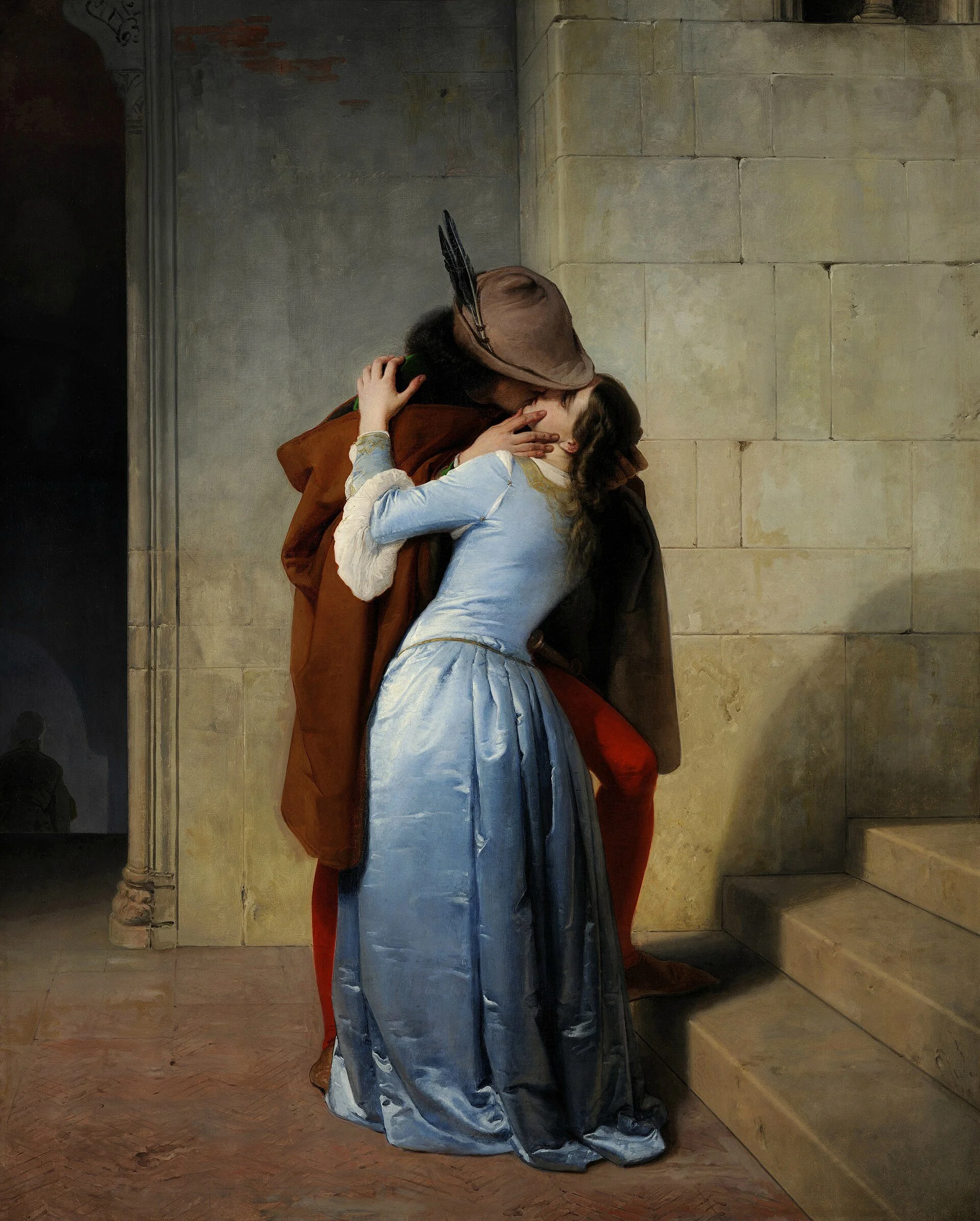
Il Bacio (The Kiss) by Francesco Hayez (1859)
I read the glyphs in someone’s birth chart as guiding imagery, a way of meeting and understanding the inhabitants of their sacred landscape. I take dreams as guidance. I notice when a story arrives at exactly the right moment and I don’t call it a coincidence.
So it will come as no surprise that I feel a deep connection between the seen and the unseen realms, and that I have learned to count on it. At the hinges of my life I have been guided, helped and healed by both the seen and the unseen, and they show up as synchronicities, as serendipitous meetings, as dreams, and as the potent imagery of stories that grab my imagination and hand me something enlivened to hold on to, the way you hold a lifeline in rough seas.
Twenty years ago I was deciding whether to leave New York for Portland.
I had no job here. No apartment. No prospects of either. Just the angsty tension between do I stay and do I go, and I was a ball of stress ready to burst from all that indecision. Then a dream came for me. Invisible angels carried me to the Portland fire department, where I was greeted by every fireman on duty and by the television crew that had turned up to film the celebration of my arrival.
Never before or since have I dreamt of angels.
Same goes for firemen.
That dream sealed the deal. I said yes to Portland, and the yes set off a domino run: the right folks, the right connections, a place to live, eventually a job, and some of the best people I have ever known.
So when something grabs my attention in a way that feels alive, I have learned to trust it. I may not understand it at first, and I usually question myself somewhere in the middle of it, but I trust the image, meaning the story, the emotional tone, the gut feeling, and I follow it to see where it leads.
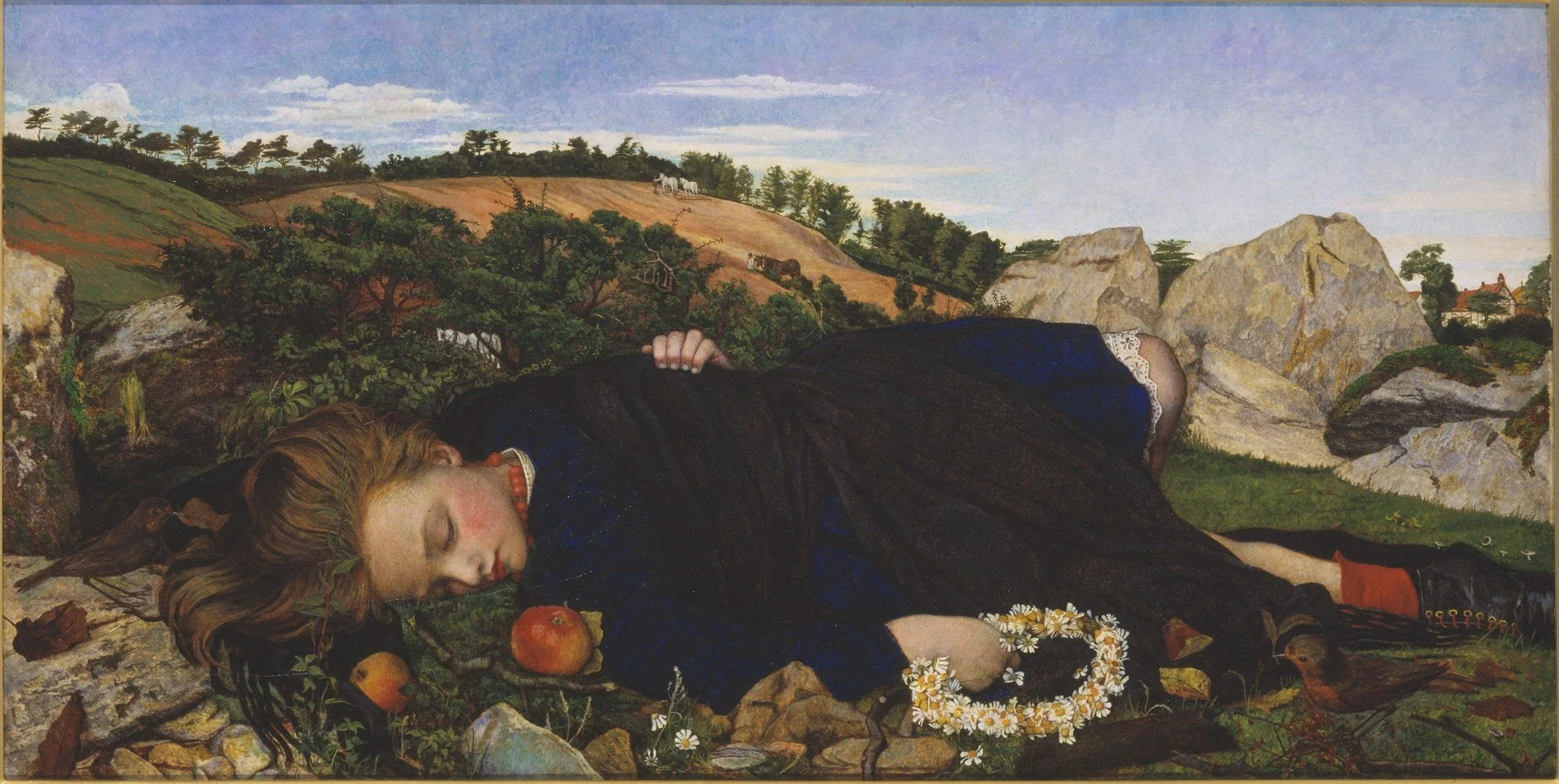
Robins of Modern Times by John Roddam Spencer Stanhope (1860)
Case in point: my cave year.
A couple of intense years of burning out as a mental health coach, largely thanks to the commodification of healing work by corporate greed, and then my mother’s rapid decline and her passing. By early last year I was standing at the edge of a cliff, and what I feared was the abyss at the bottom of it.
I am familiar with the landscape of grief, having travelled it when my father died, but that landscape changes and morphs each time you enter it, and the burnout gave this one a flatness I did not recognize at all. I looked at the year ahead, utterly depleted, and braced myself for the bogeymen I was certain to meet down there: anxiety, confusion, the loss of clarity.
I write about descents and Underworld journeys and I still fear them, much like anyone else does. I have come to see that fear as par for the course, and as a signal worth reading. It tells me that what is coming is not superficial, that it will not be handled with better habits or a gratitude practice, and that it intends to reach the marrow of my bones and change what is in there.
The fear is how the body registers the gravitas before the mind has language for it. I would be more worried if it were missing.
What I did not account for, bracing at the top of that cliff, was that I would not be making the crossing alone. A threshold companion was already on its way, one I had met before in other guises and did not recognize at first because of the outfit it chose this time.
It did not arrive as a dream, or a mentor, or one of those meetings that look like luck from the outside. It arrived as an entire literary genre.
I remember having several conversations about this with a very good friend of mine, a therapist in the UK, someone I have been talking with weekly for over twenty years while we track our inner journeys together and make meaning of them out loud. I told him I did not fully understand what all this romance reading was leading to, only that I felt it as a livewire and a lifeline at once, and that all I could do was trust it.It had grabbed me in a way that made dismissing it as a flight of fancy impossible.
And it was not merely accompanying the grief. It was doing something to it. I had braced for flatness, and what arrived instead was texture. Desire came back first, then curiosity, then the creative libido I had quietly assumed was another casualty of the burnout. The books were not a distraction from the crossing. They were nourishing me through it, and they are nourishing me still.
I was a famished shipwrecked sailor who washed up on a fruit laden island, and romance was the fruit.
That is not a flourish. Grief and burnout together had left me malnourished in a way I had no words for at the time, and these stories were the only thing I could keep down. I devoured all of it, everything I could metabolize.
Understanding came later, and only in part. The trust came first.
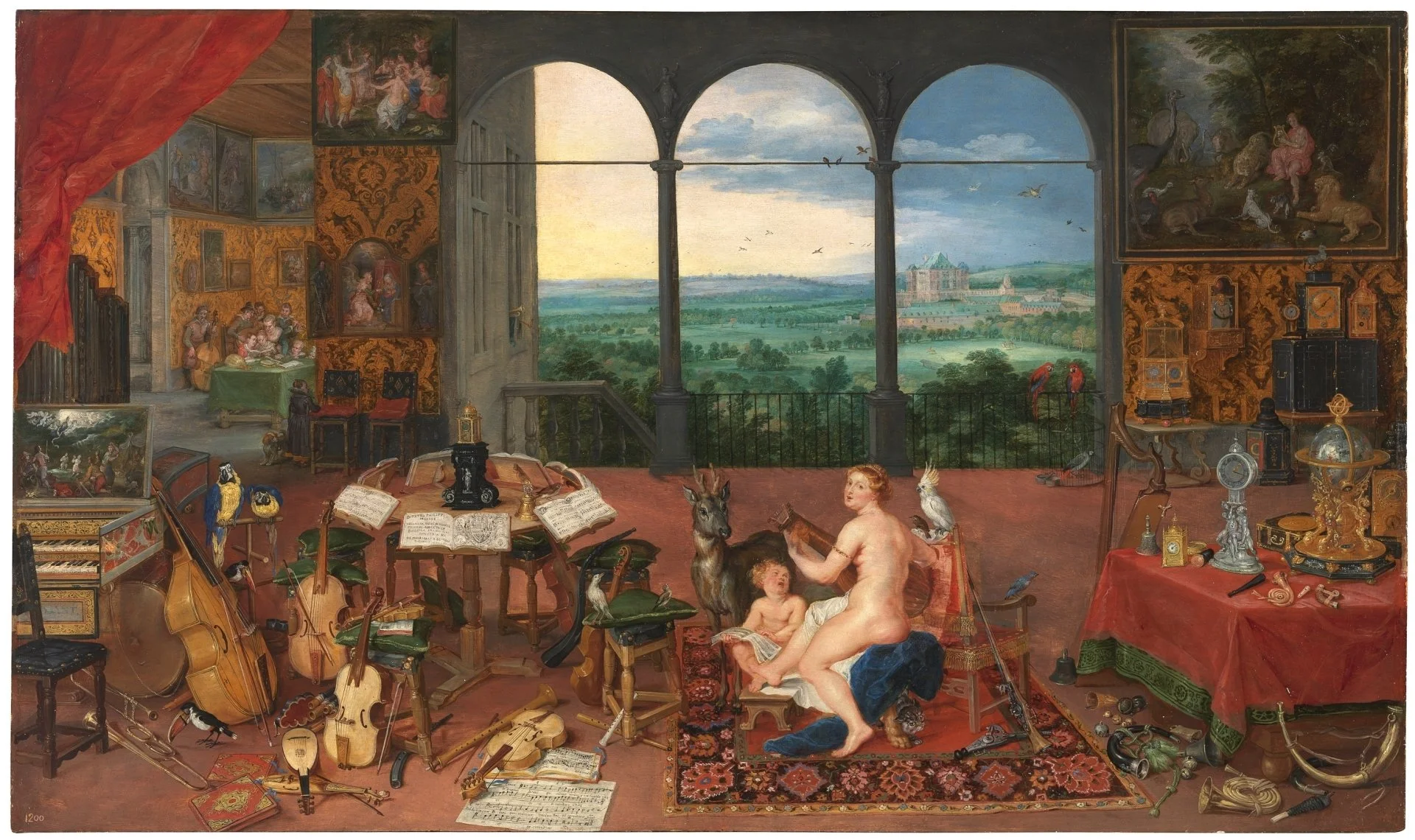
The Sense of Hearing by Peter Paul Rubens (1617-1618)
Here is what came of the trusting.
Somewhere around book fifty, the creative pulse returned. My fangs, which I had assumed were gone for good, started coming back in. And my master’s thesis, written twenty years ago after a dream made me change course at the eleventh hour, from Saturn and depression to romantic comedies as maps of a heroine’s quest for the magical Other, came pushing up through the floor of my life again.
I had thought that one was done and dusted. I wrote it, then I lived it, doing my own long inner work with the magical Other until I met my partner and married him, at which point I filed the whole thing under completed. It was not completed. It had been composting. After a year inside these books I can see it widening its geography in front of me, into territory I did not know it had. That deserves an essay of its own, some other time.
I still cannot see the horizon romance is walking me toward. I do not have the final destination and I have stopped asking for one. What I have is this: the deeper I go into the work with it, the more nourishing it proves to be, and the further I am willing to follow.

Souls on the Banks of the Acheron by Adolf Hirémy-Hirschl (1898)
I have had companions at other crossings and I have loved every one of them. Hermes, our quintessential trickster guide, who turns up precisely when you are lost and enjoys it a little too much. The mentors. The helpers who appear on the road carrying exactly the thing you needed, with no explanation for why they had it on them. Even the Saturnian dweller at the gate who tests your mettle before he lets you cross, and whom I have grown fond of the way you grow fond of a hard teacher. They all have a role to fulfill.
But what about the one who carries an erotic charge?
Not necessarily because it will lead to a romantic encounter. Because desire is a potent compass, and more than that, desire is what moves the body toward making things take shape in the physical world. The guides orient you. They point, they instruct, they describe the road and where it bends.
The threshold lover does the one thing none of them do: it makes you want to go.
That distinction took me a long while to see, and I only saw it by metabolizing what I was reading, book after book, paying attention to what the stories were doing to me rather than only to what they were about.
Here is where it landed. When a crossing is genuinely hard, the thing missing is almost never information. Most of us know exactly what we should do. We have the map, the advice, the framework, the three good reasons, and we sit in the chair another year anyway, fully informed and completely immobile.
What is missing is appetite.
Something has to make the crossing worth wanting and not merely worth doing, because a body will not move for an obligation the way it moves for a hunger.
The threshold lover is the figure that gives the hunger back.
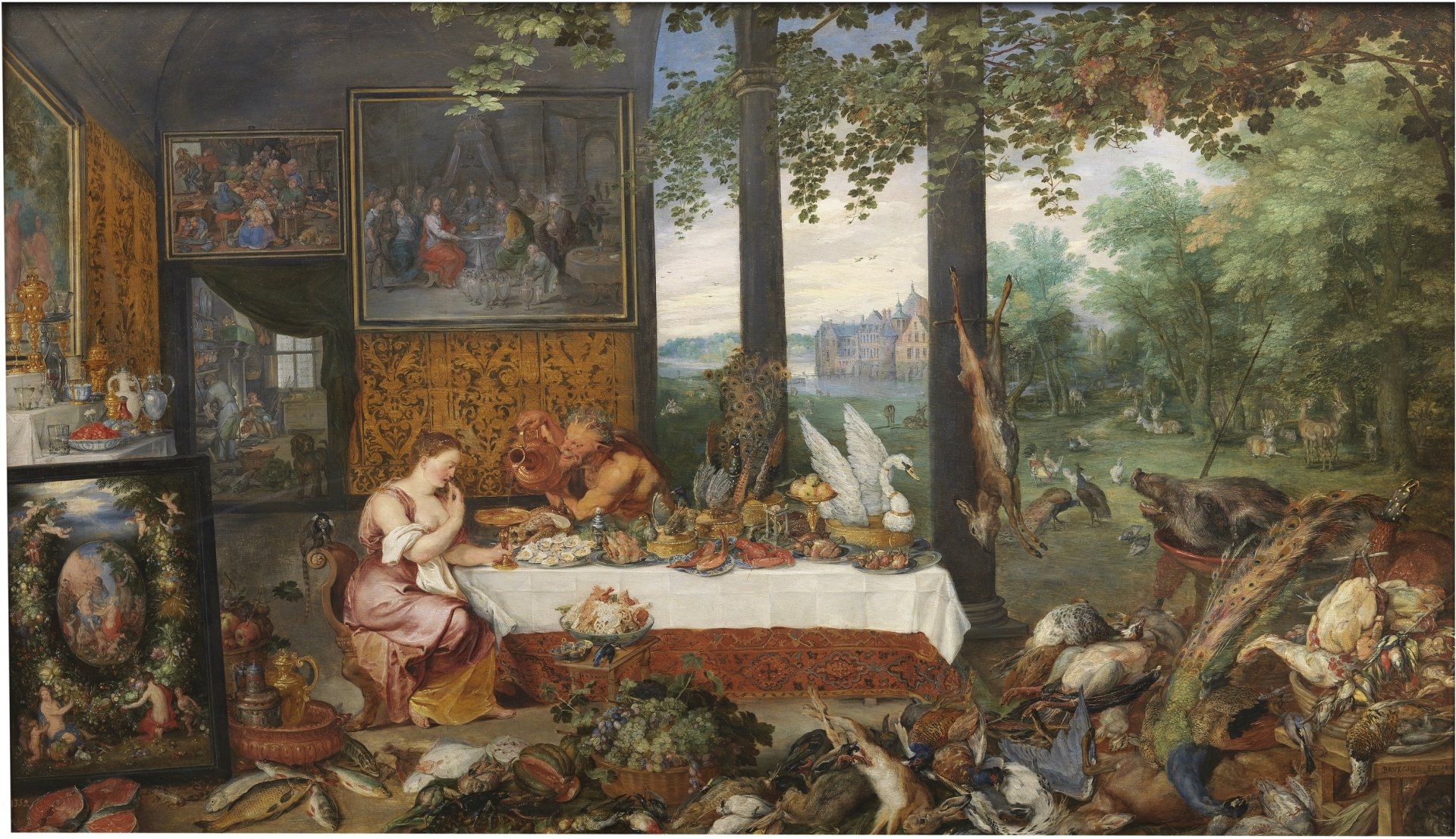
The Sense of Taste by Peter Paul Rubens (1618)
I should be plain about something here, since I opened with it.
I do not experience the threshold lover as a metaphor I happen to find useful, and I am not offering you a clever way of thinking about your reading habits.
When I say a companion arrived, I mean something arrived. It came with its own agency, its own timing, and its own opinions about what I needed, none of which I chose. I did not decide that romance would be the thing to meet me at that cliff.
I would never have picked it. It came the way the angels and the firemen came, uninvited, oddly specific, and impossible to argue with, and my only job was to notice and say yes.
Whether you want to call that the unconscious speaking in images, or the imaginal realm doing what it has always done, or something older with fewer footnotes, is up to you. I hold all three loosely and I do not need the question settled in order to work with it.
What I will not do is flatten it into a tidy frame, because the figures who come to accompany us are not frames. They arrive. They stay a while. They change what happens next.
However yours shows up, it shows up. Through a story. Through a figure in a dream. Through a celebrity crush (I worked with those a great deal after writing the thesis, and there is real gold in what they can do for us when we stop being embarrassed about them). Or through the one romance readers know best, the book boyfriend, and the book girlfriend too, who has been looking at you, kid, from the other side of the page.
The outfit is not the point. The outfit is only what the threshold lover put on to catch your attention.
What matters is whether you let yourself notice it, or whether you file it where most of us were trained to file it, under flight of fancy, fun distraction, guilty pleasure, nothing to see here. That filing is the whole difference between crossing your life’s transitions oblivious to the help around you, seen and unseen, and crossing them with a companion who accompanies and witnesses you.
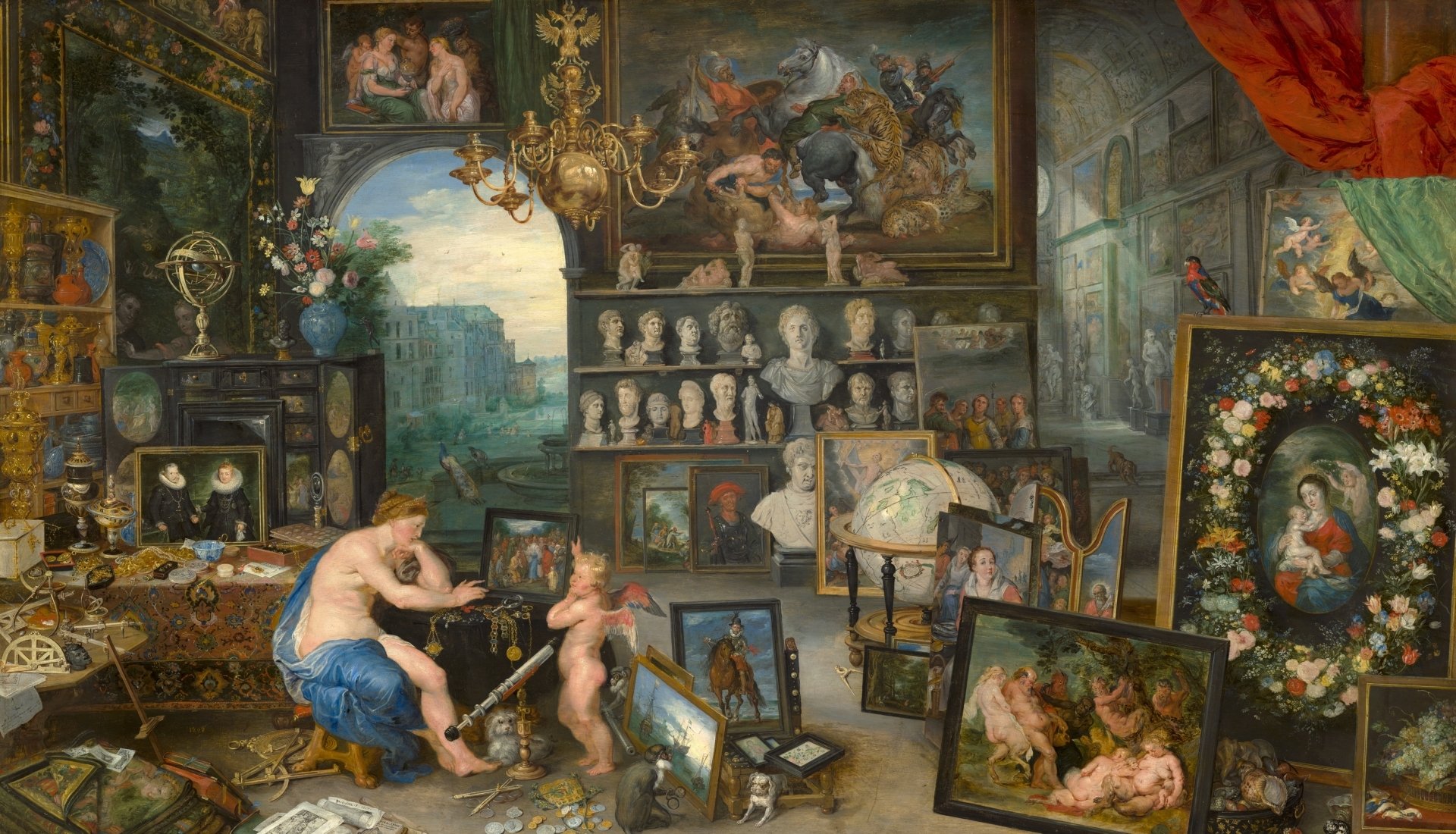
The Sense of Sight by Peter Paul Rubens (1617)
So widen your scope.
Notice the folks who come into your life, for a season or for good. Notice the stories you are compelled to read and watch, the figures who turn up in your dreams and daydreams, the characters who tug at you, fictional or otherwise. There will be a part of you judging all of it from the corner of your mind. Do not give it the floor.
Bring your beginner’s mind instead, and watch what starts happening when you let yourself be accompanied.
The threshold lover is not the same one for every season of your life. Each crossing has its own distinct weather and its own landscape. The one you made in your early twenties is nothing like the one you are making now, because neither you nor the crossing is the same. The same lover can absolutely return at a different stage.
All I would ask is that you stay curious about how yours wants to show up this time, rather than deciding in advance who is coming.
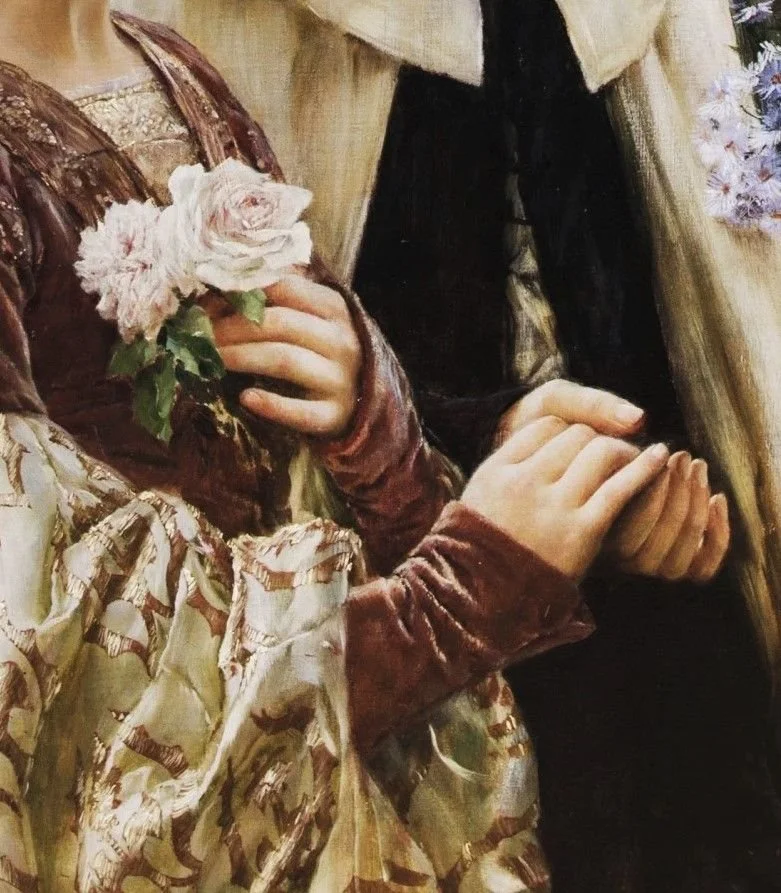
(Detail) Incipit Vita Nova by Cesare Saccaggi (1903)
I noticed these eight in romance novels.
They live in other genres and other mediums too, so if romance is not your territory you will still find yours.
But romance is where they are most legible, because romance novels are alchemical manuals of transformation dressed in sexier clothes.
A threshold lover never arrives in a settled life, and romance is the genre most consistently about lives coming unsettled. It just calls that a plot. The meet cute, the forced proximity, the marriage of convenience, the fake dating, the second chance, all the deliciously tropey tropes we are told are simplistic, are stages of psychological and alchemical transformation wearing better outfits.
I do love a personality quiz. Am I Rachel or Monica? Which house would the hat sort me into? (Slytherin, in case you were wondering.) You know the drill and you have done your share of them.
This one came out of a year of reading with my whole body. The same eight figures kept appearing across the books in different costumes, doing the same work on me each time, and after enough of them I stopped calling it a coincidence and started asking what they were. There are surely more. I may add them later. Eight is a good number to start with and meet.
They follow no order of power or importance. What matters is which one reaches you.
The Lantern Holder. The steady glow in the dark.
The Anchor in the Storm. The steady point when everything else is in motion.
The Doorway Dancer. The spark that turns the crossing into a dance.
The Shape-Shifter. The one who makes change impossible to sleep through.
The Guardian of the Gate. The friction that readies you.
The Key-Bearer. The one who carries the key to your own new knowing.
The Bridge Builder. At home in the in-between, fluent in both worlds.
The Fellow Wanderer. The one who knows this ache from the inside.
Take the quiz and find out which one is accompanying you this season.
Then go back and look at your favorite characters again. I suspect you will find they have been carrying this for you already, and that some part of you has known it for a while.
I am still learning these eight myself. I feel surrounded by them, and true to my motto I intend to romance every one, and to bring back here whatever they teach me.
Then do me a favor, three of them actually.
Share it with the people you know who are mid-crossing right now, the ones who could use a companion and do not know to look for one.
And come tell me who showed up for you, in the comments or by reply. Your answers teach me how these eight are being experienced out in the wild, which is the only way this work grows.
We do not have to white-knuckle our way through any of it, our own crossings or the collective ones. We can court them with the curiosity of lovers. And yours is already waiting for you to notice.