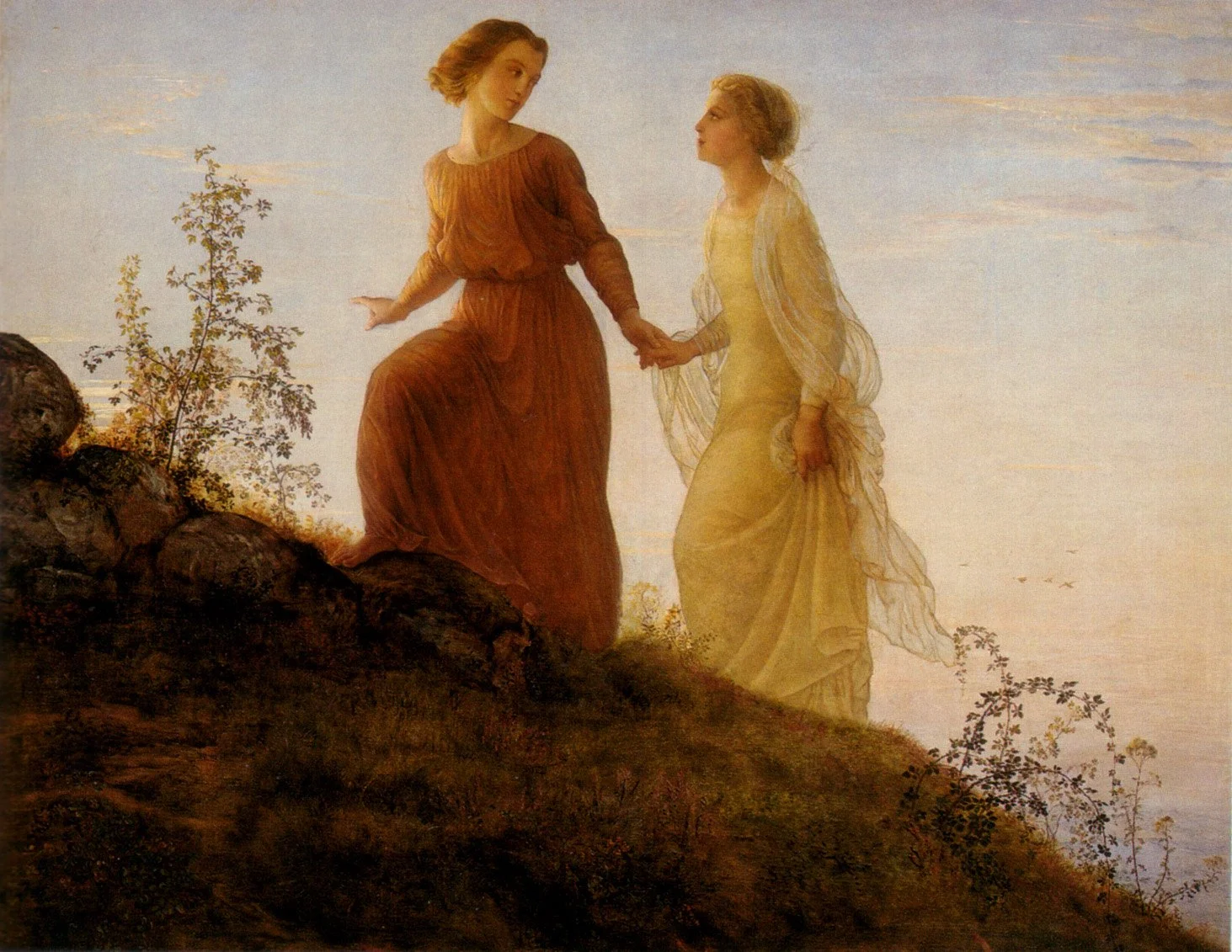
The Fellow Wanderer
The one who knows this ache from
the inside.
This page is your full result.
Bookmark it or save the link to return to it anytime.
A threshold is more than a doorway.
It's what opens when a life changes, and the whole landscape that follows: that in-between stretch where the old life has ended and the new one
hasn't yet taken shape. Myth has long told of threshold guardians,
the ones who test whether you may pass.
The Threshold Lover is a different figure entirely:
not there to test your crossing, but to accompany it, and to teach you to meet what's changing the way lovers meet each other, with curiosity, presence, and care.
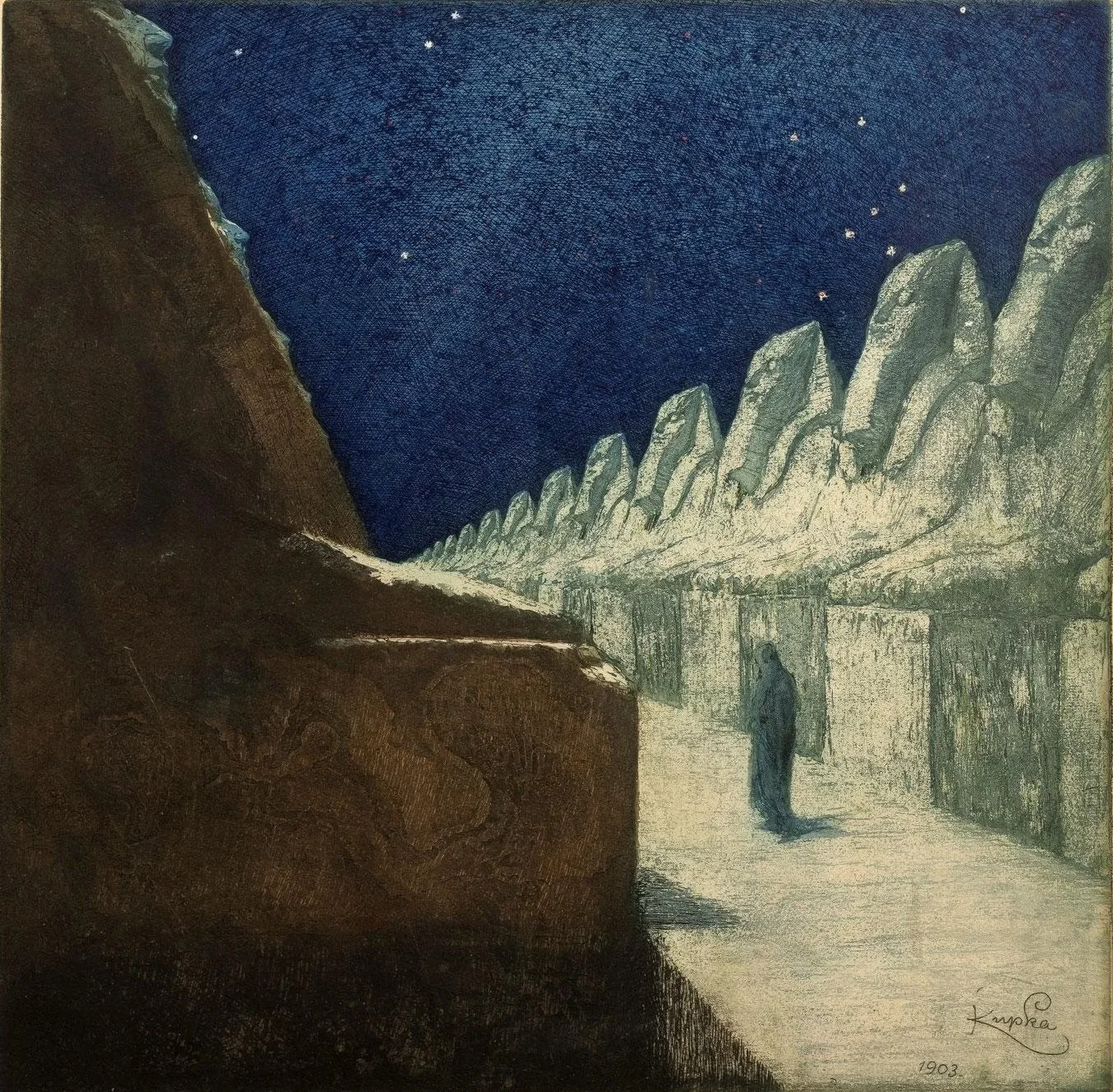
The Threshold You're Standing In
This crossing carries plenty of uncertainty, and the uncertainty is real.
But there's a weight on top of it that makes everything heavier:
you're in it alone.
Around you, everyone's life seems to be proceeding on schedule while yours is mid-upheaval, and even the people who care, who ask how you're doing and mean it, aren't in it with you.
Some crossings are like that: genuinely hard to articulate from the inside, so that every attempt to share it comes out in versions, softened for company, and lands from a distance.
The loneliness that settles in isn't about how many people are around you.
It's about none of them knowing what this is like in here, and the not-belonging that grows in that gap.
This is the threshold that calls for the Fellow Wanderer.

Meet the Fellow Wanderer
The Fellow Wanderer is between worlds too.
That's the first thing to know about them: they're not standing on solid ground, reaching a hand down to you.
They're as unsure of the road as you are, navigating their own crossing, carrying their own questions. And here is the miracle of them: they choose to walk beside you anyway.
Not to lead, not to follow, but to share the road, and to offer solace when they see you down, the way only someone who knows the terrain from inside can.
Because that's their gift, and nothing else on this wheel replaces it: recognition. Not the observer's sympathy, kind as it is, but the fellow traveler's knowing.
When they look at you mid-stumble, you can see it in their face: they don't just see the struggle, they feel what it costs, because they're paying it too.
With them, the ache of not-belonging finally has a witness who doesn't need the explanation, and what felt unsayable turns out to be sayable after all, to the right person.
Uncertainty in their company turns into something almost unrecognizable: an adventure with a witness, where every detour becomes a story only the two of you know.
You're not just crossing together.
You're building a map together, one day at a time, to make sense of it: where you've been, what you've weathered, and how far you've actually come, which is always farther than it feels from inside.

Why This One, Why Now
Here's what the pull toward this lover is telling you: your threshold's deepest need isn't a solution, a strategy, or even a guide. It's a witness.
This crossing has been asking to be seen, felt from the inside by another, and the longing you feel for the Fellow Wanderer is that need speaking plainly at last.
There's no weakness in it, and nothing to be embarrassed about. Being witnessed isn't a crutch for people who can't cross alone; it's how human beings have always crossed.
The loneliness you've been carrying isn't something to be ashamed of.
It's a signal, telling you plainly that a companion belongs in this crossing.
And the Fellow Wanderer proves something else just by existing: you are not the only one out here.
Other people are in crossings of their own right now, hidden the way yours is hidden, behind lives that look perfectly on schedule from the outside.
You've been assuming you're the only one in a world of people who have it figured out. The truth is that the road is fuller than it looks: some of the very people whose steadiness you've envied are mid-crossing themselves, keeping it quiet and dressed up for company, exactly the way you keep yours.
Which means the recognition you're longing to receive is also one you're able to give, and that's often how this lover actually arrives: not found, but met.
Two people discovering, mid-conversation, that they're both on the road.
One thing to be aware of in this courtship: recognition is powerful, and it can blur into merging.
When someone finally feels what you feel, it's tempting to take on their burdens as your own, to read their needs as your compass, to let their crossing set the direction of yours. It can feel like devotion.
But their threshold is theirs, and yours is yours, and the deepest form of walking together honors that: two maps, one road.
You can share the ache without adopting the itinerary.
Companionship that costs you your own crossing has quietly stopped being companionship.
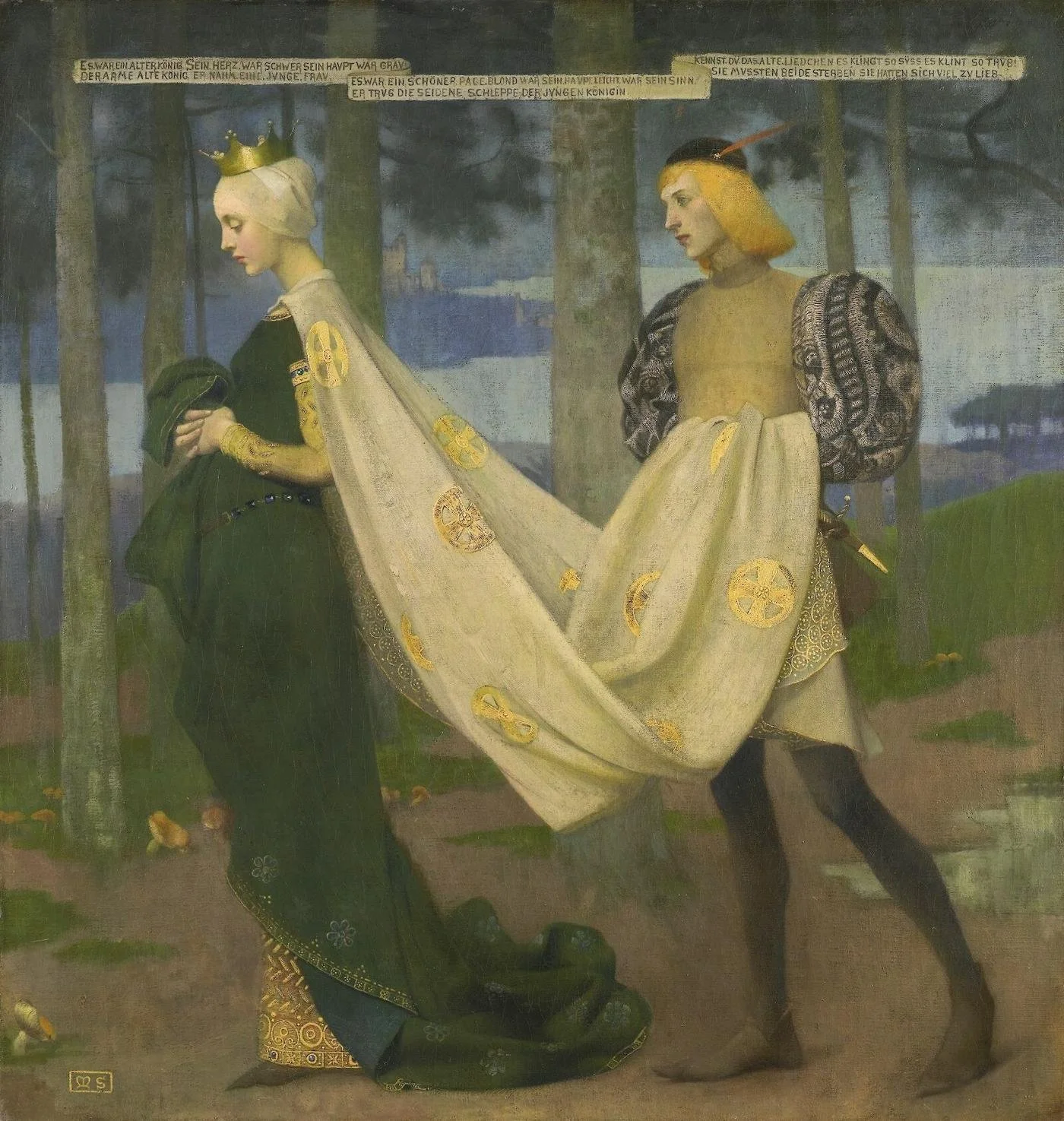
Romancing This Threshold
Tell one person the unsoftened version.
Choose someone, even an unlikely someone, and describe where you actually are, without the edits you usually make for company.
You're not asking them to fix anything, and you can say so.
You're letting the crossing be witnessed once at full size, and noticing what shifts in you when it is.
Look for the other wanderers.
They're around you, hidden the same way you are, behind lives that look on-schedule. Listen for the small tells: the sideways comment about big changes, the hesitation when someone answers "how are you."
Offer one of them the recognition you've been longing for, a simple "that sounds like a real crossing you're in."
You'll learn from the inside how much that sentence gives, and sometimes it's how the companion arrives.
Keep the shared map, even at distance.
If there's someone in your life mid-crossing too, near or far, make the walking-together concrete: a standing check-in, a walk, an exchange of notes from each road.
Two sentences a week is enough. The point isn't advice.
It's the ongoing proof, in both directions, that neither of you is doing this unwitnessed.
Stories for the Crossing
While you're in this crossing, feed yourself stories about unlikely companions and found family.
Two lost people sharing a road.
A stranger who turns out to carry the same ache. A ragtag table where someone gets folded in before they've proven anything.
On the page or the screen, these stories won't fix the loneliness of your threshold, but they'll do something almost as good: they'll remind you that being lost in company is a different country from being lost alone.